We all have those nights once in a while- the tossing-and-turning, mind-racing, counting-the-minutes-until-morning nights. I had one last night. I used to think I was cursed with insomnia, that nothing I did could shake me from my sleepy sleepless stupor. Sometimes I still think that is the case, but almost always lack of sleep comes from breaking one of the cardinal sleep-well rules:
1. Go to bed and wake up at the same time every night. For me it's 11pm-7am, but something different might be better for someone else. I also don't buy into the 8-hour rule- I like 8, but I haven't found any reason to believe 6 or 9 wouldn't be better for someone else. The important thing is regularity.
2. Avoid caffeine. Some people try not to drink caffeine after a certain time, and understand many are loathe to go without their morning coffee, but I find skipping the java (and cola, etc.) completely to be a HUGE help on the sleep front. If your a coffee lover and an insomniac, I urge you not to overlook the possible connection.
3. Refrain from eating or exercise 4 hours before bed and from looking at TV or computer screens 30-60 minutes before bed. Exercise is too stimulating and will make it harder for your body to release the chemicals necessary for falling asleep. Eating also engages your body in other processes while simultaneously providing your body with energy it is best not to have when trying to sleep. Light from TV and computer screens interferes mimics sunlight in a way that interferes with normal circadian rhythms.
4. Keep your bedroom cool, clean and dark. A drop in temperature simulates the onset of night and sgnals to your body that it s time to sleep. Blocking out artificial light provides a similar benefit. Having a clean room helps to keep your mind clear and calm and prevent racing thoughts.
5. Use your bedroom only for sleeping and having sex. Letting the bedroom become a second office, dining room or living room prevents you from associating the room with sleep. I make an exception for sex because that is an intimate, night time activity that doesn't cause me to start worrying about work or other stressful parts of life.
6. Don't take naps. It throws off your circadian rhythm and keeps you from being tired at bedtime. If you stay up too late, wake up on time and go to bed on time. You may be tired for a day, but you stay on schedule rather than having a whole slew of out-of-whack days.
7. Sleep only when sleepy/ get up and do something else if you are in bed for more than 20 minutes without sleep. Going to bed when you are not tired increases time spent awake in bed, which will leave you feeling frustrated, not rested. Likewise, lying in bed when you are having trouble sleeping will have a similar effect. Go into the other room, and read or do something else quiet and relaxing until you feel ready to sleep.
8. Establish bedtime rituals. I put my pajamas on, floss, brush, wash the face, shut the shades and curtains, pull the covers back in a certain way... you get the picture. But having a 15-20 minute process helps your mind transition from day to night and slow down enough to let you drift off.
9. Get some sun. Having exposure to sunlight, even for just 20 minutes during the day, helps to set your natural clock. This will make it easier to fall asleep when it's dark and also easier to get up again when it's light out in the morning. People who live in places where there is very little sun in the winter may want to invest in an artificial sunlight machine, but for poverty-stricken grad students such as myself the real deal is the best (a.k.a. most affordable) option.
10. If you're really worried about sleeping on a particular night, try taking a hot bath 90 minutes before bed. The drop in body temperature following the bath will help you fall asleep easily and naturally.
Today I broke the caffeine rule. I watched the Bears-Packers game with the boyfriend in the afternoon (drinking some delicious Spotted Cow), and at dinner I switched to Diet Coke while he stuck with the whiskey. Now it's 9pm, he's passed out and I'm hyper and bored. Amazing how poorly I follow my own advice. At least I know why I am going to be up late tonight...
9.20.2009
9.17.2009
Winter Workout Ideas
I have noticed in my life, and maybe you can relate, that exercising in the winter is a hell of lot more difficult than exercising in the summer. I don't want to leave my cozy apartment to get to the gym, and the dark days make me feel gloomy and lethargic. However, if I do motivate myself to get out of the house (or even just off the couch) and do something physical, I feel WAY better. To this end I have compiled a list of winter fitness ideas to help keep me moving as the colder weather sets in.
Outdoor Fitness
In the winter months people often experience mood slumps and sleep difficulty due to lack of sun exposure. Sun exposure aids in the absorption of vitamin D which is essential to many vital biological processes (including some involved in sleep and mood regulation), and as little as 20 minutes a day outside can significantly boost emotional well-being and sleep quality. Therefore, outdoor fitness is even more important in the sluggish, couped-up winter months. he following are a few activities that should not be overlooked as great outdoor exercise options.
-Walking/Hiking
Walking out side through snow burns three times as many calories as walking on an indoor track- 100 calories in just 10 minutes for a 150-lb. person. Get bundled up and take a 30-minute walk outdoors for great exercise without any travel time or cost. I am planning to try walking for 30 minutes toward my work in the morning and then take the bus from wherever I end up. If you have a little more time, hit up a state park and try one of the trails. Most parks maintain a few trails year round, and outdoor beauty can take on a new charm in the winter. I your really feeling adventurous, you could even try snowshoeing...
-Cross-Country Skiing:
Many universities in cold places have all manner of winter sporting clubs, often with free or very cheap equipment rentals for students. If this is not the case in your situation, many city park systems have similar programs.
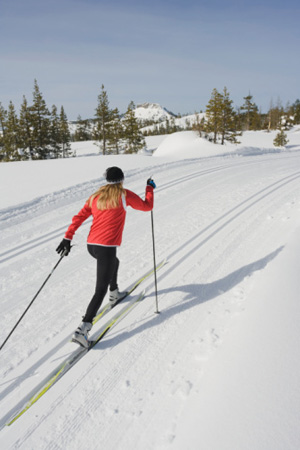
Cross-country skiing is one of the most intense cardiovascular exercises a person can perform, (over 500 calories burned per hour for a 150-lb. person exerting moderate effort) and also grants the added benefit of time spent outdoors.
-Downhill Skiing/ Snowboarding
Although downhill skiing is a bit more expensive, for those living in a cold place near a set of slopes investment in a season pass may be well worth the cost. Downhill skiing burns almost as many calories as cross-country (400/hour for a 150-lb. person) and can be enjoyed for hours on end. For someone with a very busy week day schedule, such as a graduate student, one day of weekend skiing is a fantastic way to burn off the extra calories accumulated during the work week, and also reduce stress by taking a mini-vacation. Although a smaller amount of daily exercise is ideal, the time constraints of a busy life may make this option a more practical choice.
-Biking
This may not sound like a cold-weather activity, but with proper outer wear, I hear it's really not much different then biking any other time of year (provided the streets are plowed). I am currently a bike commuter, and am seriously hoping to keep this up at least a couple times a week throughout the year. The main concern is keeping the wind out, and I'm in the process of finding affordable ways to procure proper attire. I'll let you know how this one goes...
Indoor Fitness
On the coldest of days, getting outside is not just unappealing but also dangerous.
-Go to The Gym
I know, I know, I said that I was trying to avoid this one, but come on, when its -20 degrees outside, there really aren't many better options. Maybe don't go every day, but let's say once or twice a week get on that bus and get your workout the old fashioned way. By mixing up your routine, there really are ways to make the gym more fun and keep, and who knows maybe a good session or two will get you wanting more.
-Jump Rope
You can get one of these very cheaply and use it all winter long for some fast, effective cardio work at home. A 150-lb. person will burn over 100 calories by jumping for just 10 minutes. Do short sessions on commercials or on short study breaks and you'll burn a good amount without cutting into your daily routine.
-Body Weight Exercises
Although these strength training exercises do not provide a very high calorie burned, they do a LOT to keep you toned, and better yet they are absolutely free and can be performed in your home.
-Yoga
As many people now rave, yoga is a fantastic way to build strength and flexibility while also reducing stress and helping yourself to feel more connected. I have been practicing yoga for about seven years now, but became discouraged a few years ago by the high prices of group classes. I have sine developed my own home yoga practice. To make such a practice effective, it is important to set up a peaceful space, and to have a reference for pose ideas. Setting aside even 15 minutes a day can be extremely effective.
On the other hand, if you are one who prefers the structure and camaraderie of a group class, investigate whether your university or community has any classes available. These settings often offer much more affordable classes than private studios.
Outdoor Fitness
In the winter months people often experience mood slumps and sleep difficulty due to lack of sun exposure. Sun exposure aids in the absorption of vitamin D which is essential to many vital biological processes (including some involved in sleep and mood regulation), and as little as 20 minutes a day outside can significantly boost emotional well-being and sleep quality. Therefore, outdoor fitness is even more important in the sluggish, couped-up winter months. he following are a few activities that should not be overlooked as great outdoor exercise options.
-Walking/Hiking
Walking out side through snow burns three times as many calories as walking on an indoor track- 100 calories in just 10 minutes for a 150-lb. person. Get bundled up and take a 30-minute walk outdoors for great exercise without any travel time or cost. I am planning to try walking for 30 minutes toward my work in the morning and then take the bus from wherever I end up. If you have a little more time, hit up a state park and try one of the trails. Most parks maintain a few trails year round, and outdoor beauty can take on a new charm in the winter. I your really feeling adventurous, you could even try snowshoeing...
-Cross-Country Skiing:
Many universities in cold places have all manner of winter sporting clubs, often with free or very cheap equipment rentals for students. If this is not the case in your situation, many city park systems have similar programs.
Cross-country skiing is one of the most intense cardiovascular exercises a person can perform, (over 500 calories burned per hour for a 150-lb. person exerting moderate effort) and also grants the added benefit of time spent outdoors.
-Downhill Skiing/ Snowboarding
Although downhill skiing is a bit more expensive, for those living in a cold place near a set of slopes investment in a season pass may be well worth the cost. Downhill skiing burns almost as many calories as cross-country (400/hour for a 150-lb. person) and can be enjoyed for hours on end. For someone with a very busy week day schedule, such as a graduate student, one day of weekend skiing is a fantastic way to burn off the extra calories accumulated during the work week, and also reduce stress by taking a mini-vacation. Although a smaller amount of daily exercise is ideal, the time constraints of a busy life may make this option a more practical choice.
-Biking
This may not sound like a cold-weather activity, but with proper outer wear, I hear it's really not much different then biking any other time of year (provided the streets are plowed). I am currently a bike commuter, and am seriously hoping to keep this up at least a couple times a week throughout the year. The main concern is keeping the wind out, and I'm in the process of finding affordable ways to procure proper attire. I'll let you know how this one goes...
Indoor Fitness
On the coldest of days, getting outside is not just unappealing but also dangerous.
-Go to The Gym
I know, I know, I said that I was trying to avoid this one, but come on, when its -20 degrees outside, there really aren't many better options. Maybe don't go every day, but let's say once or twice a week get on that bus and get your workout the old fashioned way. By mixing up your routine, there really are ways to make the gym more fun and keep, and who knows maybe a good session or two will get you wanting more.
-Jump Rope
You can get one of these very cheaply and use it all winter long for some fast, effective cardio work at home. A 150-lb. person will burn over 100 calories by jumping for just 10 minutes. Do short sessions on commercials or on short study breaks and you'll burn a good amount without cutting into your daily routine.
-Body Weight Exercises
Although these strength training exercises do not provide a very high calorie burned, they do a LOT to keep you toned, and better yet they are absolutely free and can be performed in your home.
-Yoga
As many people now rave, yoga is a fantastic way to build strength and flexibility while also reducing stress and helping yourself to feel more connected. I have been practicing yoga for about seven years now, but became discouraged a few years ago by the high prices of group classes. I have sine developed my own home yoga practice. To make such a practice effective, it is important to set up a peaceful space, and to have a reference for pose ideas. Setting aside even 15 minutes a day can be extremely effective.
On the other hand, if you are one who prefers the structure and camaraderie of a group class, investigate whether your university or community has any classes available. These settings often offer much more affordable classes than private studios.
9.16.2009
The Total Body Approach
I see "health" as a lot more than just diet and exercise. Health is something that inludes emotional well-being, social and relational satisfaction, spiritual connectedness, creative expression, adequate rest and intellectual engagement in addition to nutrition and fitness.
Before I get all willy-nilly with my ramblings, I'm going to spend this first post outlining my health philosophy and the ways I plan to include all the different aspects of health in this blog.
Here goes...
1. Nutrition
Eating well means eating for both health and pleasure. For me, this means eating whole foods rather than processed, focusing on fruits, vegetables and whole grains. I am not a vegetarian, but for environmental reasons I eat very little meat. I find that maintaining such a diet leaves me feeling energized, satisfied and confident. Although a tight graduate student budget makes keeping this sort of diet this slightly more difficult (I can't exactly just raid Trader Joe's every week and still pay rent), it IS possible and well worth the effort.
In the process of overcoming my eating disorder, I had the opportunity to work with a wonderful nutritionist who helped me develop my food philosophy and healthy habits. As per her recommendation I eat about 1,800 calories a day and the food recommendation in this blog will reflect that. You may want to eat more or less, obviously, depending on your size and goals. If you like, you can calculate your own calorie needs here. If you are a graduate student (or and undergrad) you might also want to look into whether your university provides a nutritionist service. It is usually completely free to students and even a single-visit consultation can be infinitely healthful.
In short is my belief that true happiness (in that peaceful zen sense of the word) comes from doing the things you need to do to survive (eat, sleep, etc.,) with care and appreciation. For the "nutrition" facet of this blog, I am going to include recipes and photos of healthful, affordable recipes as I test and create them.
2. Fitness
This is one health area where grad student finances are not limiting. Every major university has a fitness center available to students, and with a little creativity one can even stay fit without ever entering such a place. So why do graduate students tend to put on weight and neglect exercise? The most cited reason is time.
It is true that it can be very time-consuming to take a bus to the gym, work out, shower and then take a bus elsewhere. Not to mention potentially boring and crowded. HOWEVER exercise is essential to an optimally functioning mind, and an excellent way to reduce stress and increase energy. Even 20 minutes a day can make a HUGE difference, and I believe that making time for fitness will result in a net GAIN of time. For me, working out makes me more efficient and clear headed, allowing me to get my work done faster and have time for out of the lab activities.
The NIH recommends getting 30-60 minutes of cardio most days, stretching for5-10 minutes most days, and strength training for twenty minutes twice a week for optimal health. Although this could of course all be accomplished in the gym, I much prefer to enjoy the outside, try something new or at least transport myself somewhere with my exercise. The "fitness" portion of this blog will include time-crunch workouts I try, reviews and recommendations of alternative cardio activities (currently learning to lindy hop and cross-country ski...), workouts that can be done at home, and other time- and budget- friendly physical fitness ideas.
3. Emotional well-being
This may mean any number of things for different people. For me, it means maintaining good relationships with my partner, family and friends, getting creative on a regular basis, maintaining a positive self-concept and spilling my insides to a journal or blog. This section of the blog will likely be primarily implicit (me ranting and raving about life, always in italics should you wish to skip it) but will also include things that have helped me become more emotionally balanced. Some examples are gratitude and feeling lists, ideas about finding and using your creative outlet (I love painting and throwing pottery), and ways to get closer to the people around you.
4. Spiritual connectedness
"Spirituality" has a religious connotation to many people, but I do not view it this way at all. I have a complex set of beliefs and metabeliefs that I will share gradually through the course of this blog (always in italics should you wish to skip over them), as well as some straight-forward ideas about spirituality in a modern world. This section of the blog will include posts with journal prompts that have helped me to explore and develop my own beliefs (with responses included), ways to get closer to nature (my personal spiritual haven) from any location or season, yoga and meditation rituals that help me feel more grounded and anything else that seems to fall into the category of spiritual well-being.
5. Rest and relaxation
Until about a year ago, I dealt with terrible insomnia. I would sleep less than 20 hours per week for months at a time, and the toll on my health and relationships was extreme. With a lot of research and the help of a sleep councilor (also available at many universities) I have almost completely overcome this issue, and can fall asleep in a matter of minutes. Rest and relaxation are vital to health, as much as proper nutrition and exercise, if not more so.
This section of the blog will include tidbits from my sleep research, relaxation techniques, affordable vacation ideas and anything else relevant to good sleep and reduced stress.
So, in a nutshell, there is what I think and what I plan to say. This blog is a work in progress (as are we all) and also a therapeutic outlet so please comment, disagree, give advice and let me know if something helps.
Yours Truly,
H.N.
Before I get all willy-nilly with my ramblings, I'm going to spend this first post outlining my health philosophy and the ways I plan to include all the different aspects of health in this blog.
Here goes...
1. Nutrition
Eating well means eating for both health and pleasure. For me, this means eating whole foods rather than processed, focusing on fruits, vegetables and whole grains. I am not a vegetarian, but for environmental reasons I eat very little meat. I find that maintaining such a diet leaves me feeling energized, satisfied and confident. Although a tight graduate student budget makes keeping this sort of diet this slightly more difficult (I can't exactly just raid Trader Joe's every week and still pay rent), it IS possible and well worth the effort.
In the process of overcoming my eating disorder, I had the opportunity to work with a wonderful nutritionist who helped me develop my food philosophy and healthy habits. As per her recommendation I eat about 1,800 calories a day and the food recommendation in this blog will reflect that. You may want to eat more or less, obviously, depending on your size and goals. If you like, you can calculate your own calorie needs here. If you are a graduate student (or and undergrad) you might also want to look into whether your university provides a nutritionist service. It is usually completely free to students and even a single-visit consultation can be infinitely healthful.
In short is my belief that true happiness (in that peaceful zen sense of the word) comes from doing the things you need to do to survive (eat, sleep, etc.,) with care and appreciation. For the "nutrition" facet of this blog, I am going to include recipes and photos of healthful, affordable recipes as I test and create them.
2. Fitness
This is one health area where grad student finances are not limiting. Every major university has a fitness center available to students, and with a little creativity one can even stay fit without ever entering such a place. So why do graduate students tend to put on weight and neglect exercise? The most cited reason is time.
It is true that it can be very time-consuming to take a bus to the gym, work out, shower and then take a bus elsewhere. Not to mention potentially boring and crowded. HOWEVER exercise is essential to an optimally functioning mind, and an excellent way to reduce stress and increase energy. Even 20 minutes a day can make a HUGE difference, and I believe that making time for fitness will result in a net GAIN of time. For me, working out makes me more efficient and clear headed, allowing me to get my work done faster and have time for out of the lab activities.
The NIH recommends getting 30-60 minutes of cardio most days, stretching for5-10 minutes most days, and strength training for twenty minutes twice a week for optimal health. Although this could of course all be accomplished in the gym, I much prefer to enjoy the outside, try something new or at least transport myself somewhere with my exercise. The "fitness" portion of this blog will include time-crunch workouts I try, reviews and recommendations of alternative cardio activities (currently learning to lindy hop and cross-country ski...), workouts that can be done at home, and other time- and budget- friendly physical fitness ideas.
3. Emotional well-being
This may mean any number of things for different people. For me, it means maintaining good relationships with my partner, family and friends, getting creative on a regular basis, maintaining a positive self-concept and spilling my insides to a journal or blog. This section of the blog will likely be primarily implicit (me ranting and raving about life, always in italics should you wish to skip it) but will also include things that have helped me become more emotionally balanced. Some examples are gratitude and feeling lists, ideas about finding and using your creative outlet (I love painting and throwing pottery), and ways to get closer to the people around you.
4. Spiritual connectedness
"Spirituality" has a religious connotation to many people, but I do not view it this way at all. I have a complex set of beliefs and metabeliefs that I will share gradually through the course of this blog (always in italics should you wish to skip over them), as well as some straight-forward ideas about spirituality in a modern world. This section of the blog will include posts with journal prompts that have helped me to explore and develop my own beliefs (with responses included), ways to get closer to nature (my personal spiritual haven) from any location or season, yoga and meditation rituals that help me feel more grounded and anything else that seems to fall into the category of spiritual well-being.
5. Rest and relaxation
Until about a year ago, I dealt with terrible insomnia. I would sleep less than 20 hours per week for months at a time, and the toll on my health and relationships was extreme. With a lot of research and the help of a sleep councilor (also available at many universities) I have almost completely overcome this issue, and can fall asleep in a matter of minutes. Rest and relaxation are vital to health, as much as proper nutrition and exercise, if not more so.
This section of the blog will include tidbits from my sleep research, relaxation techniques, affordable vacation ideas and anything else relevant to good sleep and reduced stress.
So, in a nutshell, there is what I think and what I plan to say. This blog is a work in progress (as are we all) and also a therapeutic outlet so please comment, disagree, give advice and let me know if something helps.
Yours Truly,
H.N.
Labels:
emotional health,
fitness,
nutrition,
rest and relaxation,
spirituality
Subscribe to:
Comments (Atom)